Pop Culture and Ring Shopping Strategy: A Practical Checklist Before You Buy
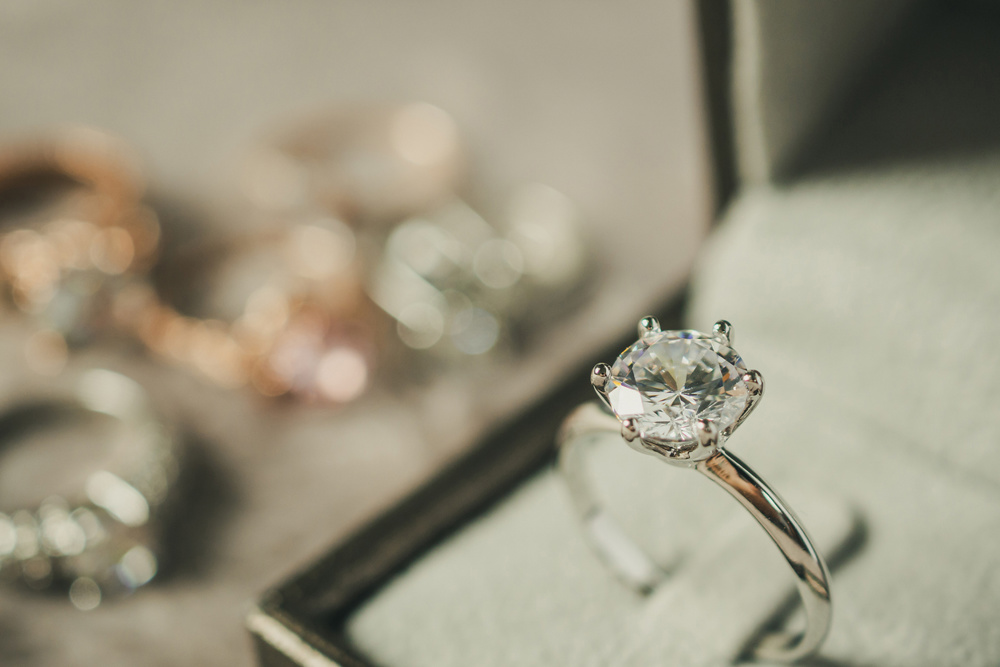
Engagement rings used to be private decisions. Today, they’re public statements. Scroll through Instagram, TikTok, or Pinterest, and you’ll see an endless stream of celebrity rings, proposal videos, and “dream ring” boards—each one shaping what people think they should want. But here’s the problem: pop culture creates aspiration, not reality.
Zendaya’s vintage-inspired diamond or Taylor Swift’s rumored cuts may influence trends, but they don’t reflect your finances, your lifestyle, or your priorities. The smartest approach is to separate inspiration from decision-making. Use trends to refine your taste—not to define your budget. Before you buy, you need a strategy. This guide breaks down exactly how to choose a ring that works in real life, not just on a screen.
Set an Engagement Ring Budget That Actually Works for You
Before you start browsing rings, you need a realistic budget—and that starts with understanding what couples actually spend. The 2024 national average sits at $5,200, but the median is $3,000, and 33% of couples spend under that. Your number should reflect customized personal values, not outdated rules like the three-month salary guideline.
Start your financial obligations planning by calculating your net monthly income, then subtract fixed expenses like housing, transportation, and loans. Factor in savings goals for your wedding, home, or travel. Whatever's left guides your ring allocation.
Regional averages vary wildly—from $4,000 in Rhode Island to over $10,000 in Massachusetts—so don't let geography pressure you. Financial advisors recommend basing your budget on your actual lifestyle. Talk to your partner first; their preferences matter more than any benchmark. The three-month salary rule was originally a marketing invention by De Beers in the 1930s, designed to sell more diamonds—not to reflect what couples could genuinely afford.
Choosing the Right Stone in a Trend-Driven Market
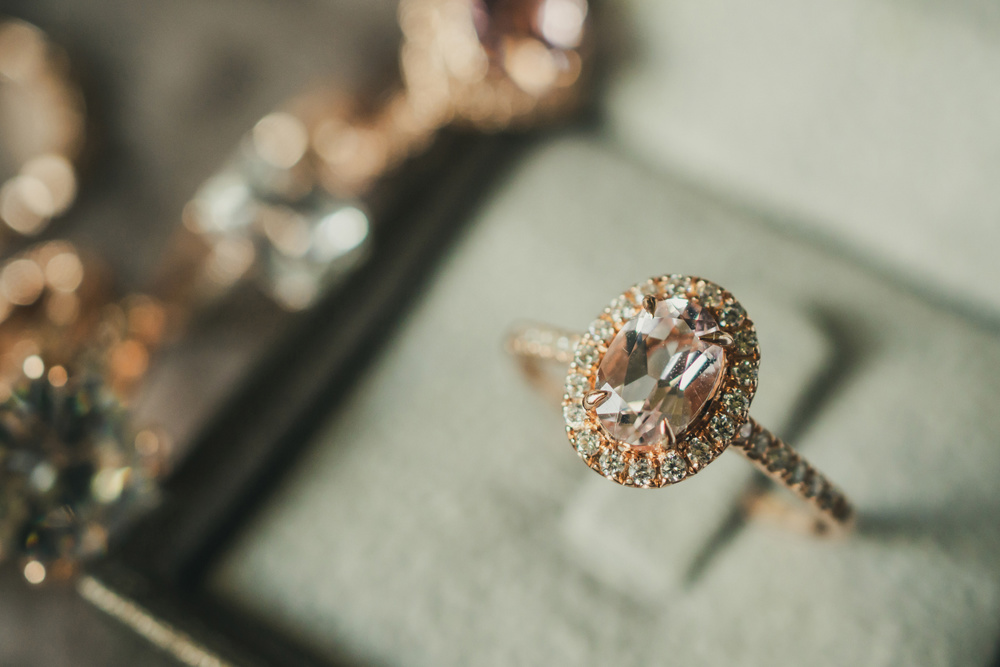
Once your budget is clear, the next decision is your center stone. Here’s where pop culture has the strongest influence—larger stones, unique cuts, and alternative gems are trending heavily across social media. You’ll typically choose between three main options:
- Natural diamonds: Traditional, durable, and often the most expensive
- Lab-grown diamonds: Identical in composition but significantly more affordable
- Moissanite: Budget-friendly, highly brilliant, and visually distinct
Lab-grown diamonds have become especially popular because they allow buyers to achieve a “celebrity look” without the celebrity price. Meanwhile, moissanite offers even greater affordability, with a signature sparkle that stands out from traditional diamonds.
This is where you balance aesthetics with practicality. Trends might push you toward larger stones, but your decision should come down to durability, cost, and what you personally find beautiful—not what performs best online.
What the Four Cs Mean When You're Spending Real Money
Choosing your stone is only half the battle—now you need to understand what actually makes one diamond worth twice another. The GIA's Four Cs—cut, color, clarity, and carat—directly shape your purchasing power considerations and determine how far your budget stretches.
Cut matters most. An Ideal-graded diamond outshines a larger, poorly cut stone every time. Color grades D–F appear colorless, but near-colorless G–J diamonds often look identical and cost markedly less. Clarity evaluates internal flaws; most are microscopic and invisible without magnification, so you don't always need Flawless-grade stones.
Carat measures weight, not size. Buying a 1.9-carat diamond instead of 2.0 saves money while looking nearly identical. Aligning your diamond quality expectations with these four factors guarantees you're paying for what actually matters visually. The shape of a diamond also plays a role, as brilliant cut shapes like round and cushion are far better at concealing inclusions than step-cut shapes such as emerald or asscher.
How to Choose a Ring Metal That Matches Your Life
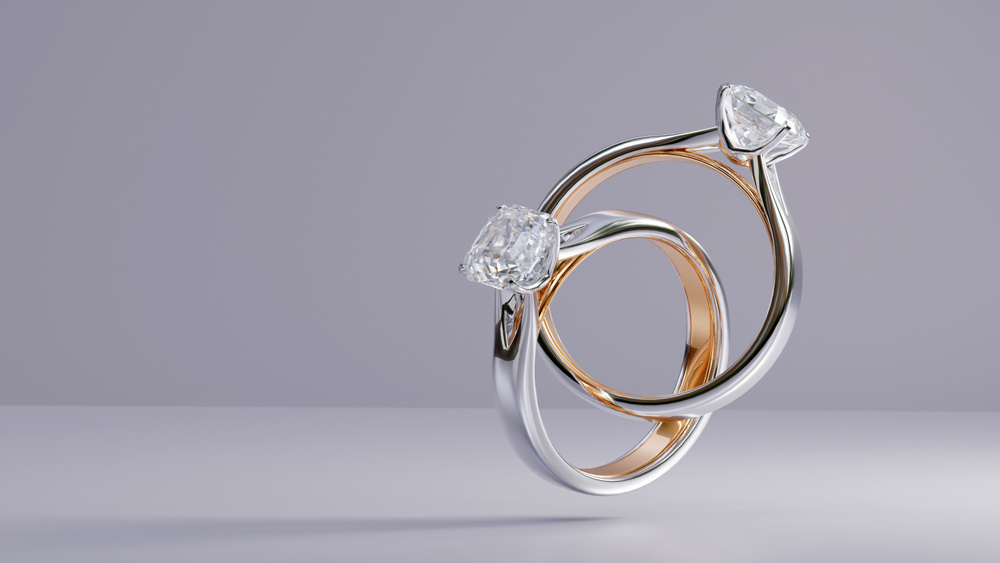
With four distinct metal categories to contemplate, your lifestyle should drive this decision as much as your aesthetic preferences. Wear and tear considerations matter enormously—tungsten carbide is ten times harder than 18k gold, while platinum resists scratching better than most alternatives. Relative hardness comparisons reveal that cobalt and titanium both outperform gold-based metals for active lifestyles.
| Metal | Hardness & Durability | Maintenance Need |
| Tungsten | Hardest available | None required |
| Platinum | Strongest overall | Minimal |
| Cobalt | Extremely scratch-resistant | None required |
| White Gold | Moderate | Rhodium replating |
Budget matters too—cobalt costs roughly one-third of white gold. If you have metal sensitivities, platinum, cobalt, and titanium all offer hypoallergenic properties worth prioritizing. Palladium is lightweight compared to platinum, making it another excellent hypoallergenic option for those who prefer a less heavy ring on their finger.
Check out MrPopCulture.com and learn more about pop culture trends in engagement rings!
Setting Styles: What Works Beyond Social Media
A ring’s setting affects both its appearance and how well it holds up over time. Social media often favors intricate designs and dramatic silhouettes, but not all of them are practical.
- Prong settings maximize sparkle but expose the stone
- Bezel settings offer full protection and durability
- Solitaires remain popular for their simplicity and resilience
- Hidden halos add subtle brilliance without added bulk
While elaborate settings photograph well, they can snag, wear down, or require more maintenance. The best choice is one that balances visual appeal with everyday usability. If a design only works in photos, it probably won’t work in real life
Online vs. In-Store: Where to Buy Your Engagement Ring
Where you buy your engagement ring matters almost as much as what you buy. Online retailers offer rings up to 40% less than physical stores, while in-store shopping lets you try before committing. Your decision depends on priorities. Consider these factors before deciding:
- Pricing: Online averages $1,099 versus $2,269 in-store for comparable rings
- Diamond certification: Verify certificates like GIA or AGS regardless of where you shop
- Return policies: Online vendors often exceed retail store guarantees with money-back options
If you value convenience, online platforms offer 360-degree HD videos, customization, and pressure-free browsing. If you need tactile confidence, 68% of U.S. buyers still prefer in-store. Hybrid jewelers now blend both experiences, so you don't have to choose exclusively. In-store shopping often comes with a limited selection compared to what online retailers can offer across diamonds, settings, and styles.
Red Flags to Spot Before You Buy
Whether you're shopping online or in-store, knowing what red flags to watch for can save you from costly mistakes. Pricing considerably below market average signals quality concerns, especially when a seller won't justify the difference. Watch for stock photography, limited product angles, and missing specifications on carat weight, gemstone quality, or gold purity—these suggest the seller's hiding something.
Legitimate sellers provide third-party gemological certifications and clear return policies. Without these, you have no recourse if the product doesn't match its description. Seller reputation matters too—check for verifiable reviews, business registration, and accessible customer service before committing.
Finally, distrust any messaging that ties spending to relationship worth. Pressure-based tactics designed to override informed decision-making are a strategy, not a value proposition. Stay focused on specifications, not emotions. A listing advertising a 2-carat diamond ring for under $30 is a near-certain indicator of misrepresentation or outright fraud.
How to Verify What You're Actually Getting
Once you've flagged suspicious sellers and pressure tactics, the next step is confirming what's actually in front of you. Differentiating diamond simulants with home tests gives you immediate answers before spending anything. Try these quick checks:
- Fog test: Breathe on the stone — real diamonds clear instantly; fakes hold fog for seconds.
- Loupe inspection: Look for natural inclusions under 10x magnification and verify any laser-inscribed GIA number.
- Diamond tester: Use a combined thermal-electrical model to distinguish diamonds from moissanite or cubic zirconia.
For deeper confidence, ensuring authenticity through professional appraisal means cross-referencing GIA, AGS, or IGI certification numbers through official lab databases. An independent appraiser confirms the stone matches its paperwork. No single method is foolproof — stack these checks together.
It also helps to understand why simulants fall short on certain physical tests: cubic zirconia, for instance, is less thermally conductive than a real diamond. This is why it behaves differently under both the fog test and a dedicated diamond tester.
Celebrity Ring Trends: What to Follow and What to Skip
Celebrity rings flood your social media feed for a reason — they shape what jewelers’ stock and what buyers want. Taylor Swift's elongated cushion cuts and Zendaya's Georgian-set 5-carat stone are driving real demand for vintage-inspired statement pieces. That influence isn't inherently bad, but you need to separate trend from fit.
Follow the movement toward personalized heritage — antique cuts, hand-engraved bands, and colored gemstones genuinely offer character that mass-market rings lack. Lab-grown diamonds also make larger, celebrity-sized stones realistically affordable.
Skip anything that only works because a celebrity wore it. Chunky sculptural bands suit some hands; marquise cuts elongate others. Before you buy, ask whether the style matches your lifestyle, not just your Instagram saves. Trend awareness informs smart shopping — it shouldn't replace it. Teal, pastel, and red sapphires are surging in popularity precisely because they offer a distinct personality that stands apart from conventional diamond rings.
Conclusion
Pop culture has changed how engagement rings are perceived. What was once a personal purchase is now a visible, shareable symbol—one shaped by trends, algorithms, and expectations. But at its core, an engagement ring is still a personal decision.
The smartest buyers don’t reject trends—they understand them. They separate what looks good online from what works in real life. They prioritize durability, budget, and meaning over spectacle. In the end, the best ring isn’t the one that gets the most attention. It’s the one that fits your life—financially, practically, and personally.